Natural Science
The Water Cycle: From Evaporation to Rainfall – How Water Shapes Our Planet

Water is one of the most essential substances on Earth, shaping our planet's landscapes, ecosystems, and climates. The water cycle, also known as the hydrological cycle, describes the continuous movement of water in its various forms—liquid, solid, and gas—through the environment. This complex and dynamic process plays a critical role in sustaining life and influencing weather patterns.
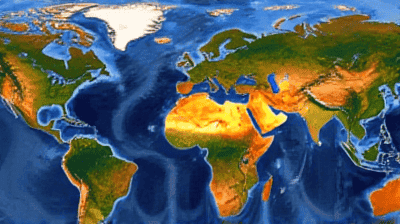
Climate Change Feedback Loops: Why Melting Ice Makes Warming Worse

Climate change is one of the most pressing issues facing humanity today, with significant implications for both the environment and society. As global temperatures rise, the effects of climate change become increasingly evident, particularly in polar regions where ice is melting at an alarming rate. One of the critical aspects of this phenomenon is the feedback loops that amplify the initial warming, making the situation worse over time.

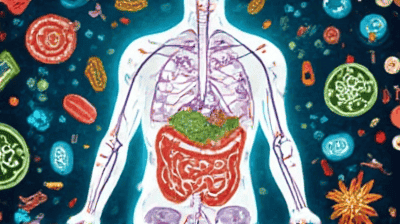
The Human Microbiome: Why Your Gut Bacteria Are Essential for Health

In recent years, the concept of the human microbiome has emerged as a groundbreaking area of research, shedding light on the intricate relationship between our bodies and the trillions of microorganisms that inhabit them. These microorganisms, primarily composed of bacteria, fungi, viruses, and archaea, play crucial roles in maintaining our health. Among these, gut bacteria have garnered special attention due to their profound impact on our physical, mental, and emotional well-being.

The Life and Death of Stars: From Nebulas to Supernovas and Black Holes

Stars are the building blocks of the universe. They illuminate the night sky, providing a spectacular display and playing a fundamental role in the cosmos. However, the life cycle of a star is a magnificent journey that begins in the depths of a nebula and can end in spectacular fashion as a supernova or a black hole.

Volcanic Eruptions: What Causes Them and Can We Predict Them
Volcanic Eruptions: What Causes Them and Can We Predict Them?

Volcanic eruptions are some of the most powerful and dramatic natural phenomena on Earth. From the fiery lava flows of Kilauea in Hawaii to the cataclysmic explosions of Mount Vesuvius in Italy, these eruptions can reshape landscapes, affect ecosystems, and pose significant risks to human life. Understanding the causes of volcanic eruptions and the potential for predicting them is crucial for ensuring safety and minimizing the impacts on communities living near active volcanoes.

Plate Tectonics: How Continents Move and Shape Earth's Surface

The Earth is a dynamic planet, undergoing constant change driven by various geological processes. At the heart of these processes lies the theory of plate tectonics, which explains how the continents and ocean floors move and evolve over geological time. This theory not only sheds light on the formation of mountains, earthquakes, and volcanic activity but also helps us understand the very structure of our planet.

Superconductors: The Future of Zero-Resistance Energy and Levitating Trains

Imagine a world where energy loss during power transmission is virtually eliminated, where trains float effortlessly above their tracks, gliding silently at incredible speeds. This futuristic vision is not just a figment of science fiction; it is the promise of superconductors. These extraordinary materials exhibit a phenomenon known as superconductivity, allowing them to conduct electricity without resistance when cooled to extremely low temperatures.

Einstein's Relativity in Everyday Life: From GPS to Gravitational Waves

When we think of Einstein, we might picture a wild-haired genius scribbling equations on a chalkboard. However, the theories he developed over a century ago profoundly influence our everyday lives in ways we might not even realize. Albert Einstein's theories of relativity—special relativity and general relativity—revolutionized our understanding of space, time, and gravity. From the technology that powers our navigation systems to the fascinating phenomenon of gravitational waves, relativity plays a pivotal

The Deep Ocean: Discoveries from Earth's Last Unexplored Frontier

The deep ocean, covering more than 60 percent of our planet's surface, remains one of Earth's last unexplored frontiers. Despite its vastness and significance, the depths of the ocean are shrouded in mystery. From bizarre creatures thriving in extreme environments to unique ecosystems that play a crucial role in global climate regulation, the deep ocean is teeming with life and potential discoveries.

The Higgs Boson: Why This 'God Particle' Gives Mass to the Universe

The universe is a vast and mysterious place, filled with countless wonders that spark our curiosity and ignite our imaginations. Among these wonders, perhaps none is as enigmatic and fascinating as the Higgs boson, often referred to as the "God particle." This intriguing particle plays a crucial role in our understanding of the universe, particularly when it comes to the concept of mass. But what exactly is the Higgs boson, and why is it so important?

  • 1
  • 2
  • 3